Ford’s lineup spans commuter cars, family SUVs, and workhorse trucks, so Ford common problems vary a lot by model and year. Still, some patterns stand out, and learning them will help you shop smarter and maintain what you already own more confidently.
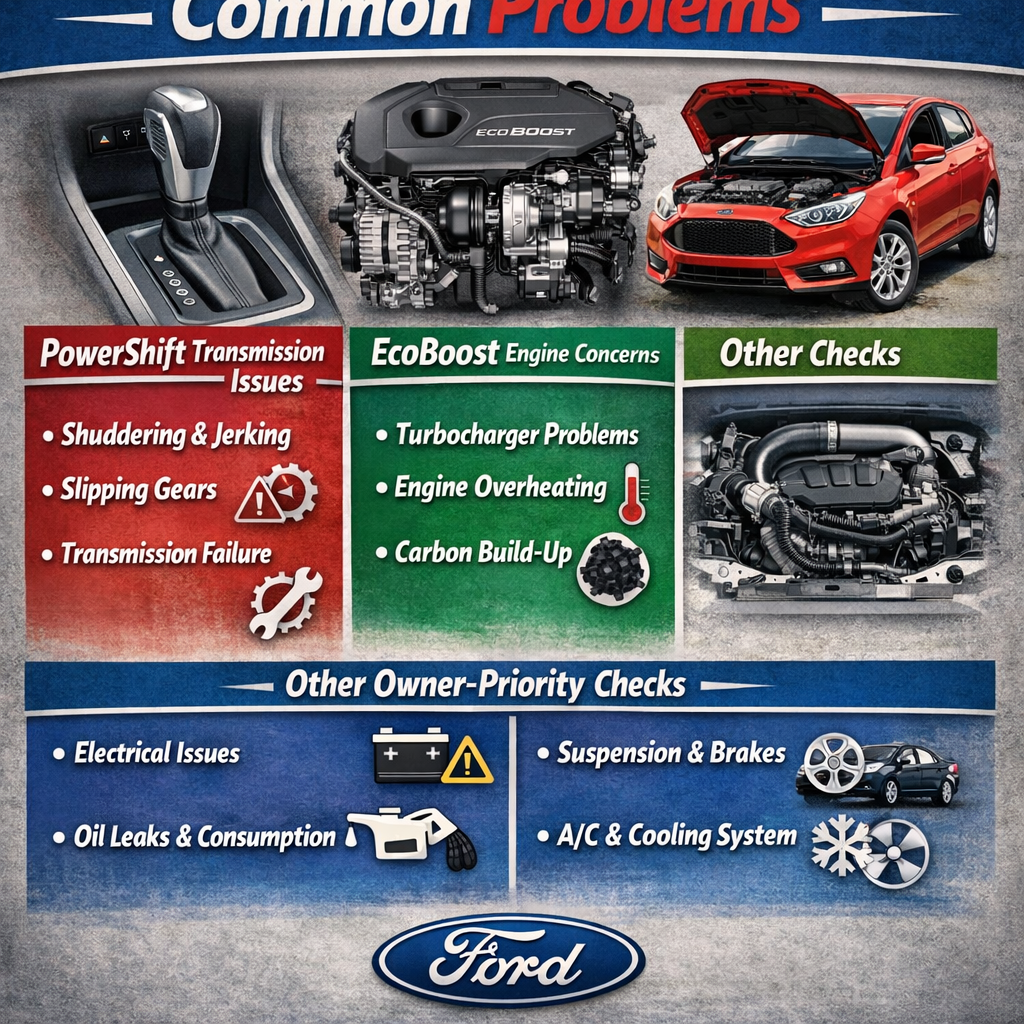
The headline issue of the 2010s for small Fords is the DPS6 “PowerShift” dual-clutch transmission found in many Fiesta and Focus models. Owners report shuddering on takeoff, harsh or delayed shifts, and frequent clutch replacements. Software updates help some cars, but many needed new clutches or mechatronics. If you’re test-driving, do extended stop-and-go runs and hill starts; if it bucks or slips, budget for work or look for proof of recent repairs.
Traditional automatics aren’t immune either. The 6F35 in Escapes and Fusions sometimes develops rough shifting, flare on upshifts, or torque converter shudder. Regular fluid changes (despite “lifetime” claims) are the cheapest insurance here. On trucks and SUVs, later 10-speed automatics may feel busy but are generally robust when serviced on schedule.
EcoBoost engines mix strong power with efficiency, but they have their quirks. Direct injection means intake valve carbon buildup is possible on many EcoBoosts; rough idle and power loss can be resolved with intake cleaning. Early 3.5L EcoBoosts saw intercooler condensation that caused stumble under hard acceleration in wet conditions—updated parts fixed much of that. The 1.6L/1.5L turbo fours had overheating and coolant intrusion issues on certain years; watch coolant carefully and don’t ignore white smoke or misfires. The 1.0L’s belt-in-oil timing design requires specific oil and on-time service to keep the belt happy.
Cam phaser rattle is a familiar sound to Ford truck fans, historically on 5.4L 3-valve V8s and seen in some newer EcoBoost V6s. A diesel-like rattle at idle or startup suggests phaser wear or oil pressure issues. Addressing it early avoids metal-in-oil drama; fresh high-quality oil at sane intervals helps extend phaser life. Another legacy pain point: the older 5.4L 3V V8 with two-piece spark plugs that like to seize or break during removal. If you’re dealing with one, follow the specific removal procedure (warm engine, patience, penetrating oil) or let an experienced tech handle it.
Cooling system and HVAC gremlins show up across the range. Escapes and Fusions with small turbos can suffer from coolant leaks or overheating; F-150s may develop heater core blockage or blend door actuator clicks. If defrost is weak or temperature swings without reason, inspect before winter sets in.
Chassis and bodywise, rust depends on climate, but door latch recalls, rear suspension toe link failures (certain models), and subframe bushing wear are well-known. Wheel bearings can whine sooner than expected on some crossovers. EPAS (electric power steering) failures made news a while back—if your wheel suddenly goes heavy and a warning pops up, don’t muscle through it; scan for codes and address promptly.
Electronics? SYNC/MyFord Touch hiccups, camera glitches, and APIM module failures happen. Sometimes a software update or a proper battery reset sorts things out; sometimes it needs a module. Batteries and grounds matter more than you think—low voltage can make Ford electronics throw tantrums.
Quick checkpoints when shopping or diagnosing:
- Transmission behavior in traffic and on hills (shudder, flare, delayed engagement)
- Coolant level stability and any sweet smells or white exhaust
- Startup rattles (cam phasers) and misfires
- Brake pulsation or suspension clunks over bumps
- Infotainment lag, random reboots, or camera failures
Preventive habits that help:
- Shorter oil intervals on turbos (5k–7.5k miles), correct spec oil
- Transmission fluid services at reasonable intervals
- Cooling system inspections before hot seasons; fix small leaks quickly
- Intake valve cleanings for DI engines when idle quality drops
- Apply TSBs and software updates; Ford publishes a lot of helpful calibrations
The big picture: Ford common problems are very platform-specific, so match what you’re buying to your needs and service history. A well-maintained Ford truck or SUV lasts; a neglected one gets expensive fast. Maintenance diligence wins here.