Volkswagen delivers a sweet mix of solid road manners and clean design. With that comes a set of VW common problems that repeat across Golfs, Jettas, Passats, and Tiguans. Know these patterns and you’ll catch issues early, save money, and keep your VW feeling tight.
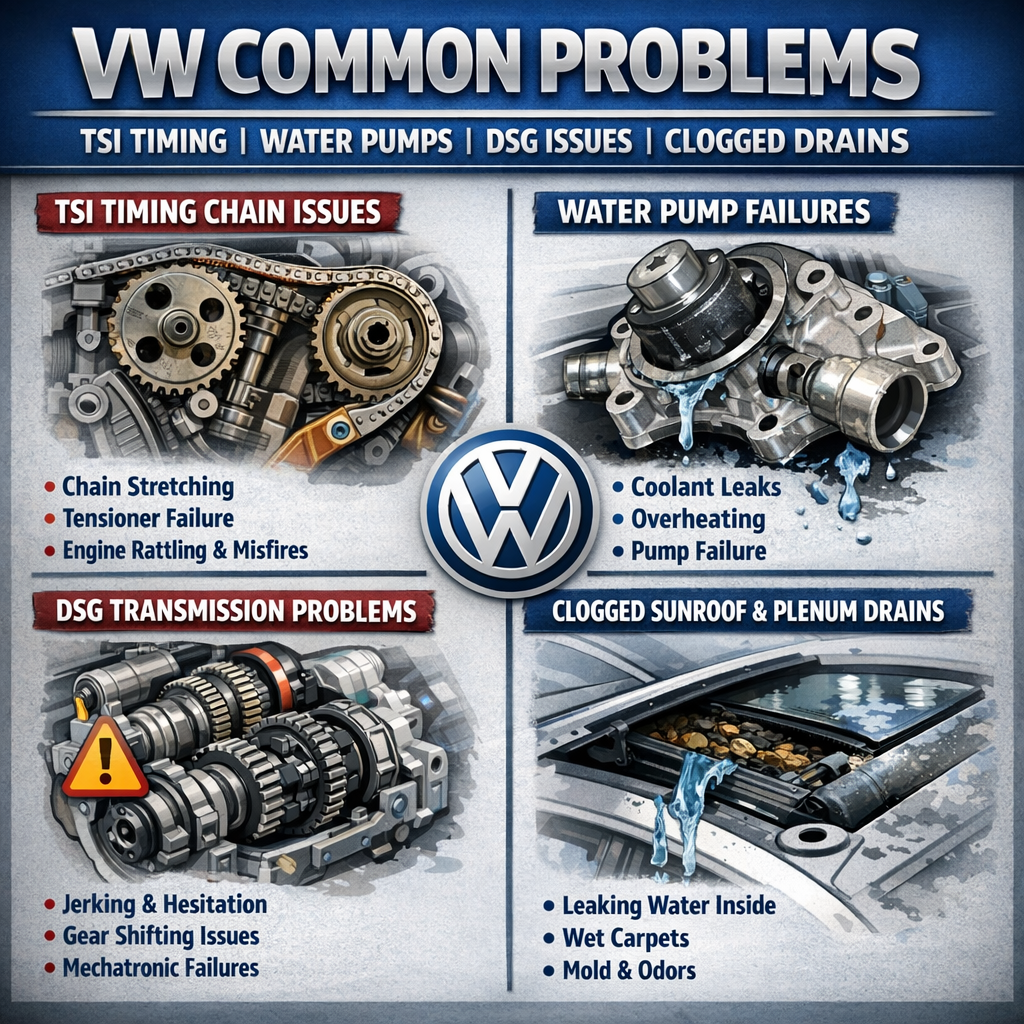
The EA888 2.0 TSI engine is widely used, and early generations (through roughly 2012) had a timing chain tensioner that could lose tension and let the chain skip. A telltale rattle at cold start, cam correlation codes, and misfires are the danger signs. Updated tensioners and guides are the fix; many cars have already had the repair, so check history and listen on a cold start before you buy.
Water pump and thermostat assemblies are another recurring topic. VW used composite housings that can crack or warp and then seep coolant. If you smell coolant, find pink crusty deposits, or notice the car slowly running warmer than usual, inspect immediately. Replacing the pump/thermostat as a unit with fresh coolant is a reliable cure.
Direct injection brings carbon buildup on intake valves, which shows up as rough idle, misfires, or lazy throttle response. Walnut blasting is the gold standard for cleaning. If your VW starts to stumble and coil packs keep failing, consider a carbon check—coils and plugs are easy, but they’re sometimes the messenger, not the message.
Speaking of coils, ignition coil failures are a Volkswagen classic. Keep a spare coil and a 10mm socket in the glovebox if you’re the DIY type; a sudden misfire under load is often just a coil away from being fixed. PCV valves and diverter valves can also fail, producing rough running, oil consumption, or odd boost behavior. Updated parts typically last longer.
DSG transmissions offer quick, crisp shifts but do require maintenance and can suffer mechatronic or clutch issues. Low-speed shudder, delayed engagement, or sudden neutral point to clutch wear or a mechatronic fault. Stick to fluid and filter changes; if it’s already acting up, proper diagnostics are your friend. Traditional automatics found in some models also benefit from periodic fluid services despite “lifetime” claims.
Interior leaks are sneakier—but oh boy, they’re common. Sunroof drains clog and send water down the A-pillars into carpets, corroding connectors and modules. If windows fog up, floors feel damp, or you hear sloshing, clear those drains and check for standing water under the carpet. Hatch seals and door vapor barriers can also leak, especially after window regulator work.
Other frequent flyers: intake manifold runner flap failure (on many TSI engines), heater core clogs that cause weak heat on one side, and Haldex pump filter clogs on AWD models (leading to poor rear engagement). On diesel models, expect the usual EGR/DPF maintenance and the occasional AdBlue heater or NOx sensor drama.
A few quick checks:
- Cold-start rattles (timing chain) and misfires
- Coolant smell or slow temp swings
- Low-speed DSG shudder or harshness
- Damp carpets, especially after heavy rain
- Weak heat on one side of the cabin
Prevention goes a long way:
- Timely oil changes and PCV checks keep carbon and consumption in check
- DSG and Haldex services on schedule
- Proactive water pump/thermostat replacement if seepage starts
- Regularly clear sunroof drains; keep door seals healthy
- Use VW/Audi-approved fluids and parts where it matters
Handled well, these cars age gracefully. Address the handful of known pain points and your VW will keep that buttoned-down feel that made you buy it in the first place.