Nissan makes a lot of practical, value-focused vehicles—and a few of their headaches are, unfortunately, just as famous as the cars. Nissan common problems are highly generation-specific, but a handful show up often enough to plan around them.
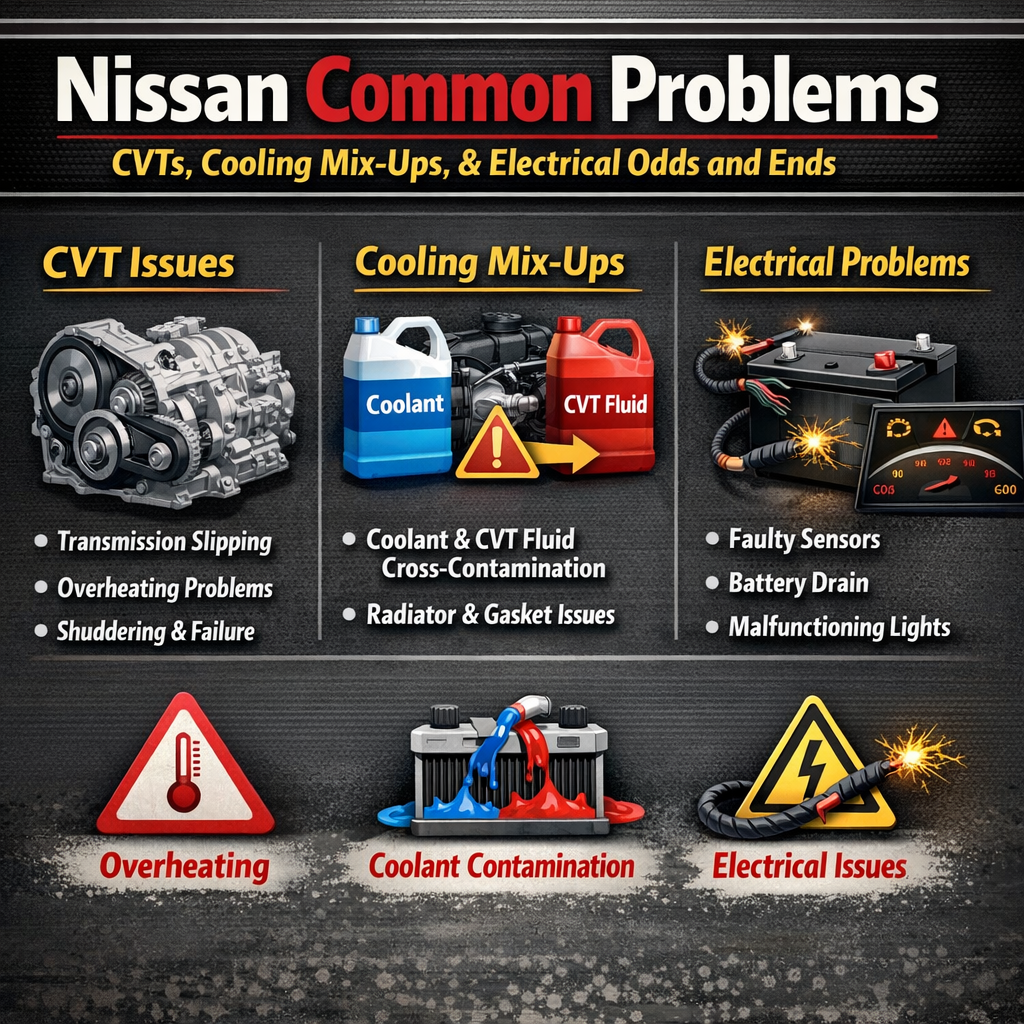
The biggest one you’ll hear about: Jatco CVT transmissions in models like the Altima, Rogue, and Sentra. Common symptoms are shuddering on takeoff, droning, overheating after long uphill drives, or delayed engagement after a stop. Heat kills CVTs, and fluid quality matters. While many were sold as “no service required,” regular NS-3 fluid changes are smart. If you live where it’s hot or you tow, a CVT cooler upgrade can add margin. Once a CVT starts slipping hard or throws a belt-related code, replacement is often the economical path.
A notorious problem on mid-2000s Pathfinders, Xterras, and Frontiers is radiator-transmission cooler cross-contamination—often called the “strawberry milkshake of death.” The internal cooler can fail, mixing coolant with ATF and destroying the transmission. If you own one in the affected range, pressure-test the system and consider bypassing the in-radiator cooler in favor of an external unit (following the proper procedure) before disaster strikes.
Timing chain noise has cropped up on some VQ V6 engines in the 2004–2010 window. Worn chain guides/tensioners can cause a whine or rattle. Left too long, you risk skipping time. If you hear chain noise at cold start or see cam timing codes, don’t keep driving and hoping it goes away. The repair is involved, but it’s a one-and-done if done properly with updated parts.
Four-cylinder QR25 engines in older Altimas have had their own issues: excessive oil consumption and pre-catalyst degradation (rare today but worth noting on older high-mile cars). Keep an eye on oil level and fix vacuum or PCV issues early—running low on oil accelerates everything you don’t want accelerated.
Electric owners: early Nissan Leaf models had noticeable battery capacity loss, especially in hot climates. The chemistry improved over time, but if you’re shopping an older Leaf, check the capacity bars, scan for state of health, and understand the range you’ll actually get. Replacement packs exist, but pricing varies widely.
On the chassis and electrical side, you’ll see front wheel bearing hum on some crossovers, brake rotor warp if the car lives on long highway descents, and steering lock module failures on late-2000s Altimas that can leave the car stuck in “no start.” HVAC blend door actuators can click, and A/C compressors aren’t strangers to replacement around the 100k mark. Occupant detection sensors (airbag system) and various fuel pump recalls have popped up over the years—check VINs for outstanding campaigns.
If you’re test-driving a used Nissan, put it through its paces:
- Long, slow hill climbs to warm the CVT
- Multiple stop-and-go cycles, then quick highway merging
- Full-lock parking lot turns for bearing/axle noises
- Cold start to listen for chain noise
- A/C performance and any clicking behind the dash
Prevent problems by:
- Changing CVT fluid on a conservative schedule with the correct NS-3 fluid
- Adding or ensuring efficient transmission cooling if you tow or live in heat
- Monitoring coolant and transmission fluid for any milkshake signs (on older trucks/SUVs)
- Addressing timing chain noises before they escalate
- Keeping up on TSBs, recalls, and software updates
In short, Nissan common problems focus on transmission health, a few specific engine generations, and some predictable wear items. Buy the right example, keep the fluids fresh, and you can rack up miles without drama.