Audi builds refined, tech-forward cars that feel special to live with. That said, recurring Audi common problems do crop up across generations. The key is knowing the hotspots and watching for early symptoms so you can fix small issues before they snowball.
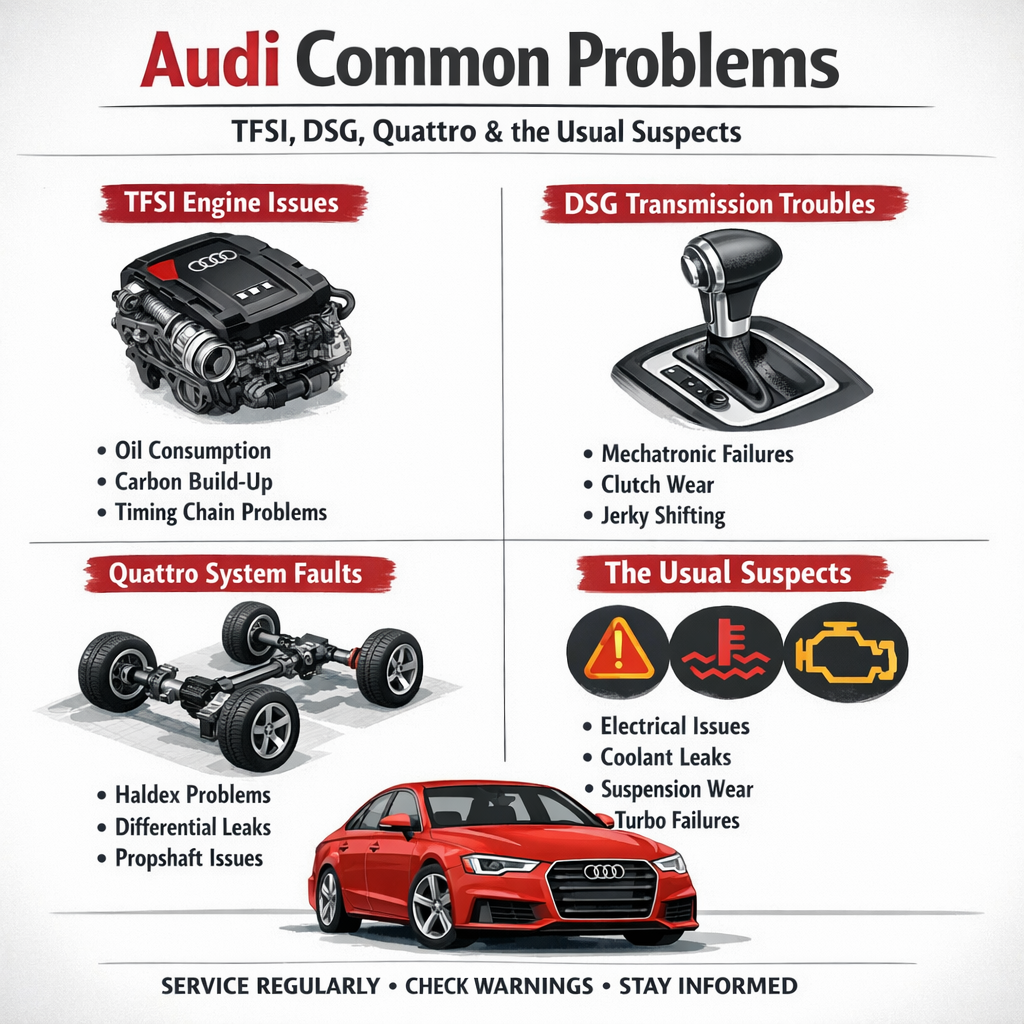
Let’s start with the big headline: oil consumption in some 2.0 TFSI engines (especially late-2000s to early-2010s). Worn piston rings allowed oil to slip past, forcing owners to top off frequently. Symptoms include low-oil warnings between oil changes, blue smoke on startup or deceleration, and carbon-fouled plugs. Audi issued various campaigns and piston/ring updates for many affected models, but older cars might still need updated internals to truly solve it. A measured consumption test is the proper first step.
Timing chain tensioner concerns hit EA888 Gen 1/2 engines (roughly through 2012). A weak tensioner can cause slack in the chain, leading to rattling at cold start and, in the worst cases, jumping time. If you hear a rattle and see cam correlation codes, park it until inspected—timing issues can be catastrophic. Updated tensioners and guides address the root cause; if you’re shopping used, proof of timing work is a big plus.
Cooling system leaks are common across many Audis. Water pump and thermostat housings (often plastic/composite) tend to seep or fail outright. You’ll notice a sweet coolant smell, pink residue, or fluctuating temperatures. Replace pumps and thermostats as a pair with quality parts and fresh coolant; it’s a solid preventative move.
With direct injection, carbon buildup on intake valves is another repeat offender. Misfires, stumbling idle, and a loss of snap at low rpm are classic signs. Walnut blasting the intake ports cleans things right up, typically needed every 60k–90k miles depending on driving habits and fuel quality. Good PCV function helps, so don’t ignore PCV faults—left alone, they can accelerate carbon issues and oil consumption.
Transmissions deserve a mention. DSG/S-tronic units can develop mechatronic or clutch-related issues that show up as jerky low-speed operation, hesitant engagement, or sudden neutral. Staying on top of fluid and filter services is critical. Multitronic CVTs (older models) can also be a sore spot if not maintained; if you feel slipping or shudder, get it checked immediately. Quattro models with Haldex systems (on transverse platforms like the A3/Q3) need periodic fluid and pump filter service—neglect leads to pump failure and lost rear-drive engagement.
Suspension and steering components wear in a predictable way. Front multi-link control arm bushings, end links, and strut mounts can introduce clunks and looseness as miles add up. On the brake side, stuck caliper sliders or rusty backing plates can cause noise or uneven wear in salted climates. None of this is exotic, but it pays to use quality parts and get the alignment right afterward.
Electronics are advanced and occasionally finicky. MMI screens and controllers, backup cameras, virtual cockpit clusters, and parking sensors can act up—often due to moisture or low voltage. Sunroof drains are a hidden troublemaker; when clogged, they dump water into carpets and modules. If you notice damp floors or foggy windows, clear drains before chasing electrical ghosts. Battery health is huge—weak voltage can cascade into strange warning lights.
Turbo-related items to keep an ear on: wastegate rattle and boost leaks. A rattly wastegate on light throttle is annoying but may not be urgent; however, a noticeable drop in boost or whistling suggests a leak that should be smoke-tested. On diesels, EGR coolers, DPF differentials, and AdBlue heaters add another layer—great when working, expensive when ignored.
A few quick tells:
- Cold-start rattle from the timing chain area
- Frequent top-offs between oil changes
- Coolant smell or random temp swings
- Jerky low-speed shifts (DSG) or “neutral” feeling
- Damp carpets, especially after rain
Prevention pays:
- Oil changes at 5k–7.5k miles with the right spec oil
- Timely DSG/Haldex fluid services
- Walnut blasting for DI engines when idle quality drops
- Replace water pump/thermostat at the first hint of seepage
- Keep sunroof drains clear and the battery healthy
Handled proactively, Audi common problems are manageable. Budget for maintenance, find a shop with VAG diagnostics, and enjoy the quiet competence these cars deliver when they’re in good health.