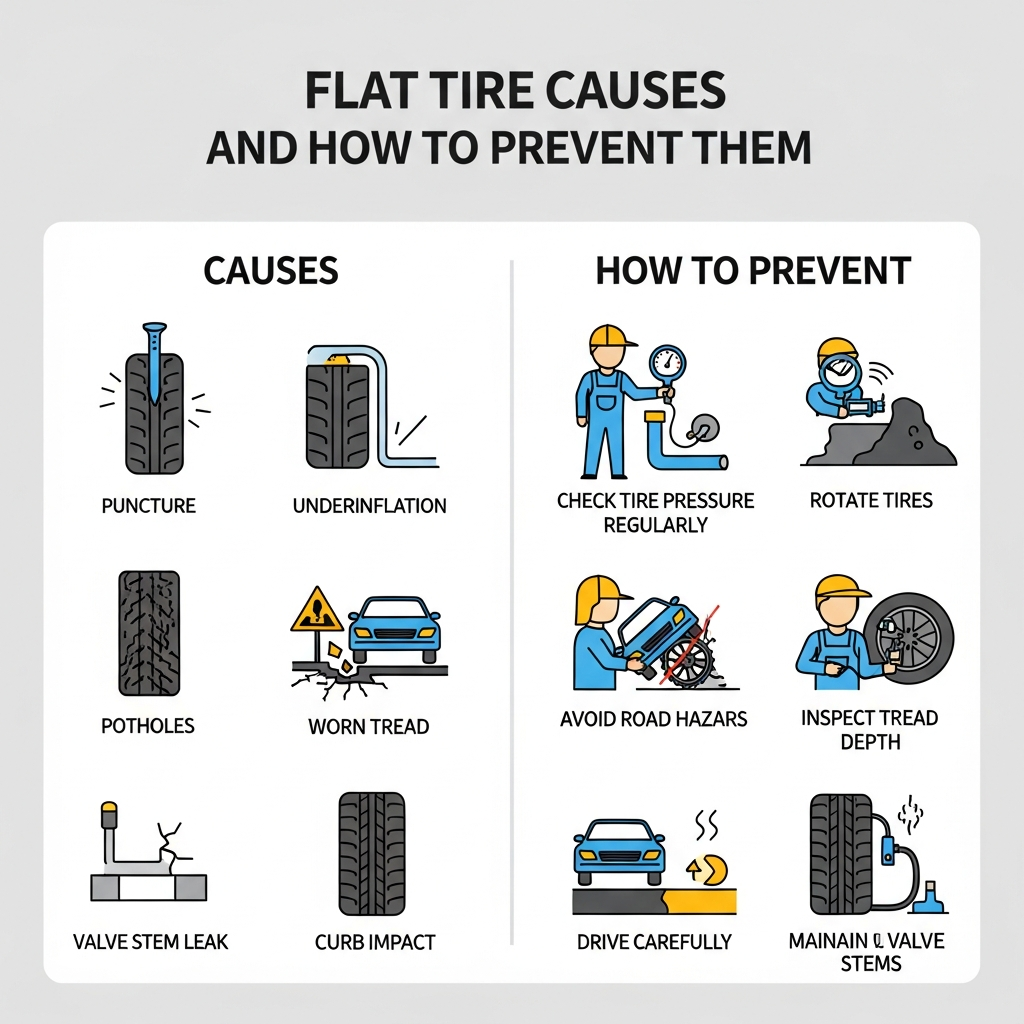
Flat Tire Causes and How to Prevent Them
Flat tires are one of the most common car problems drivers face. They can happen suddenly and leave you stranded on the road. Understanding flat tire causes and following simple prevention tips can save you time, money, and stress.
Whether you drive daily or occasionally, knowing how to prevent a flat tire is essential for every car owner.
Common Causes of Flat Tires
1. Punctures from Sharp Objects
One of the most common reasons for a flat tire is a puncture caused by nails, screws, glass, or other sharp objects on the road.
Prevention Tips:
-
Inspect roads before driving slowly in risky areas
-
Avoid construction zones when possible
-
Check tire pressure regularly
2. Worn-Out Tire Treads
Tire tread helps grip the road. When treads are worn, tires are more prone to punctures and blowouts.
Prevention Tips:
-
Check tread depth monthly
-
Replace tires before treads become dangerously low
-
Rotate tires every 5,000–8,000 miles
3. Over-Inflation or Under-Inflation
Incorrect tire pressure can cause weak spots in the tire. Both over-inflation and under-inflation increase the risk of tire damage.
Prevention Tips:
-
Check tire pressure at least once a month
-
Follow the manufacturer’s recommended PSI
-
Keep a portable tire gauge in your car
4. Sidewall Damage
Hitting curbs, potholes, or sharp road edges can damage the tire sidewall. Sidewall damage is dangerous because it can lead to sudden blowouts.
Prevention Tips:
-
Avoid curbs while parking
-
Slow down on rough or uneven roads
-
Inspect tires visually for cracks or bulges
5. Tire Age and Exposure
Even if a tire looks fine, old tires can develop cracks or lose elasticity. Sunlight, heat, and cold can accelerate tire deterioration.
Prevention Tips:
-
Replace tires every 6–10 years depending on usage
-
Store cars in shaded areas when possible
-
Rotate tires to balance wear
How to Prevent Flat Tires
-
Regular Tire Inspections – Look for cuts, punctures, or embedded objects.
-
Maintain Correct Tire Pressure – Prevents uneven wear and blowouts.
-
Avoid Road Hazards – Watch for potholes, debris, and curbs.
-
Rotate and Balance Tires – Extends life and ensures even tread wear.
-
Use Quality Tires – Invest in durable tires suitable for your driving conditions.
Signs Your Tire May Be at Risk
-
Unusual vibration while driving
-
Visible cracks on tire sidewall
-
Bulging or soft spots
-
Frequent loss of air
If any of these signs appear, it’s better to replace the tire than risk a sudden flat.
FAQ Section
Q1: Can I drive on a slightly flat tire?
A1: It is not recommended. Driving on a flat or low-pressure tire can cause permanent damage to the tire and wheel.
Q2: How often should I check tire pressure?
A2: At least once a month and before long trips.
Q3: Can all punctures be repaired?
A3: Not all. Sidewall damage or large punctures may require full tire replacement.
Q4: Do winter tires reduce flat tire risk?
A4: Winter tires provide better traction on ice and snow but do not prevent punctures from sharp objects.